Why Not Every Adventure Has to Be Loud
(5 min read)

Adventure is usually shown at its loudest.
Higher mountains.
Longer roads.
Bigger moments.
We are shown summits, distant places and people pushing themselves further than before.
And there is something inspiring in that.
But perhaps adventure does not always need to look extraordinary from the outside.
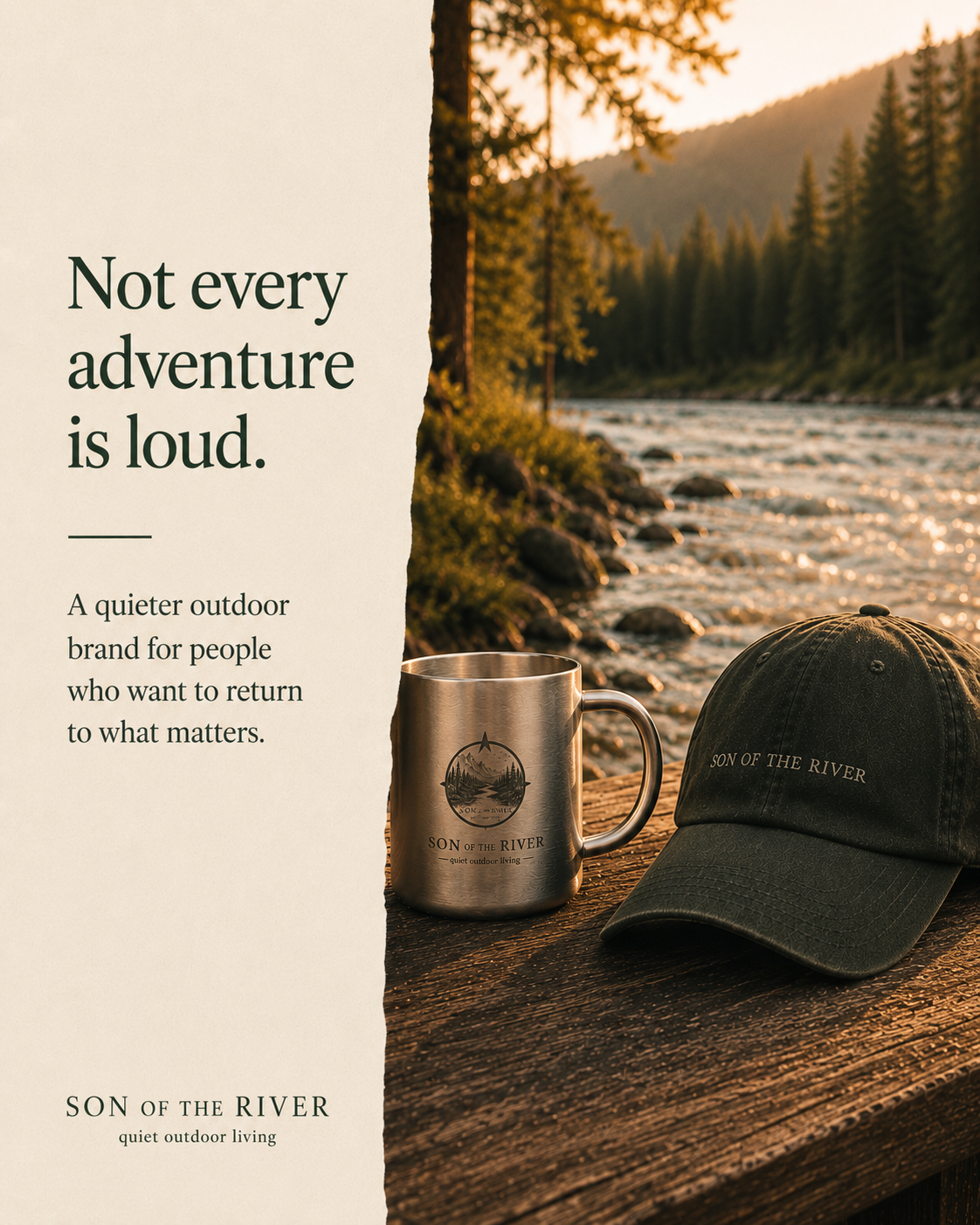
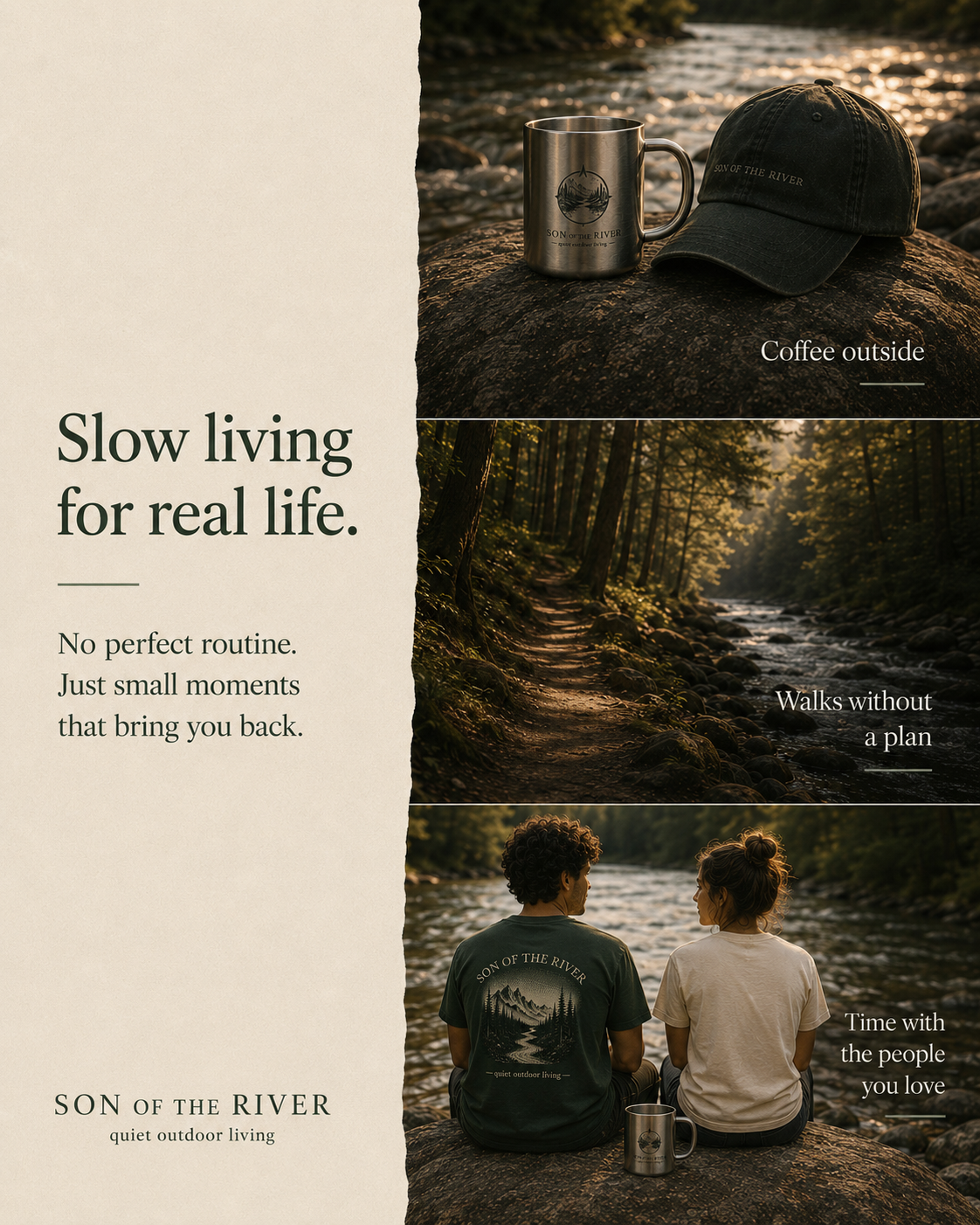
Sometimes a walk, a warm drink and a little space away from the noise can be enough.
We learned to measure adventure
Somewhere along the way, being outside became closely connected to achievement.
How far did you walk?
How high did you climb?
How fast did you get there?
Where did you travel?
What did you accomplish?
The numbers can be motivating.
But they can also change the reason we went outside in the first place.
A walk becomes a distance.
A hill becomes elevation.
A quiet morning becomes content.
A weekend becomes something that needs to be used properly.
And suddenly even our free time begins to feel productive.
Quiet outdoor living starts somewhere else.
With the idea that a moment does not need to become an achievement before it has value.
Adventure can be small
There is a strange assumption that adventure needs distance.
That somewhere far away must automatically be more meaningful than somewhere familiar.
But some of the moments we remember most clearly happen remarkably close to home.
Taking the longer path through the trees.
Walking somewhere before the rest of the house wakes up.
Stopping beside a stream you have passed a hundred times.
Drinking coffee outside while the morning is still cold.
Following a path simply because you have never taken it before.
None of these things will make an impressive expedition story.
That does not make them meaningless.
Adventure can begin with curiosity rather than distance.
You do not need a summit
Mountains have become one of the strongest symbols of outdoor life.
Reach the top.
Look down.
Achievement complete.
There is nothing wrong with wanting that feeling.
But nature exists below the summit too.
Along the river.
Between the trees.
On the forest floor.
Beside the path.
In the field behind the house.
There is an entire world outside that asks nothing from us.
No finish line.
No proof.
No reason to keep going when we would rather stop.
Sometimes the better choice is not to reach the top.
Sometimes it is to sit down halfway and stay there for a while.
Ordinary does not mean insignificant
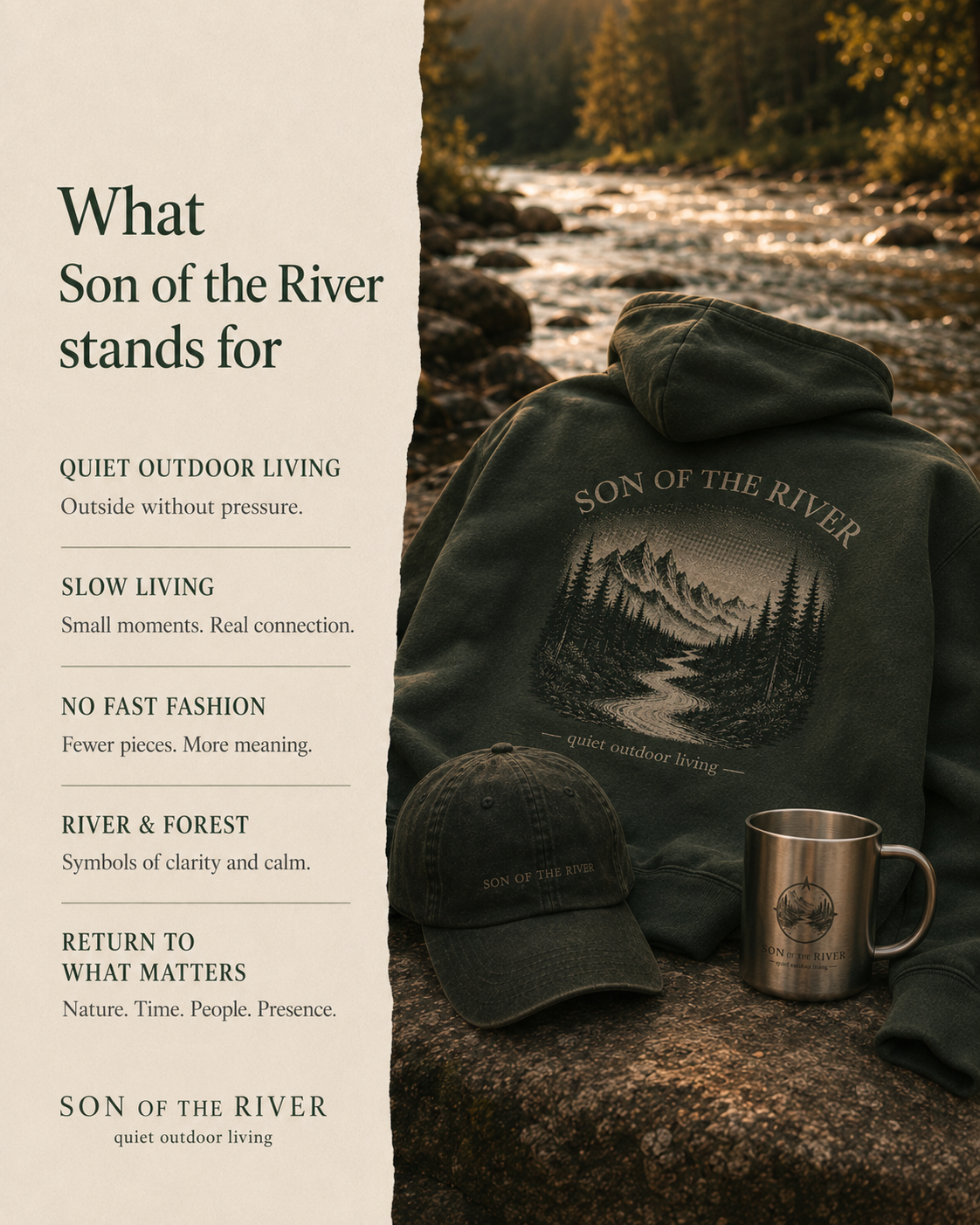
One of the ideas behind Son of the River is that ordinary outdoor moments deserve more attention.
Not because we want to make them extraordinary.
Exactly the opposite.
We want them to remain ordinary.
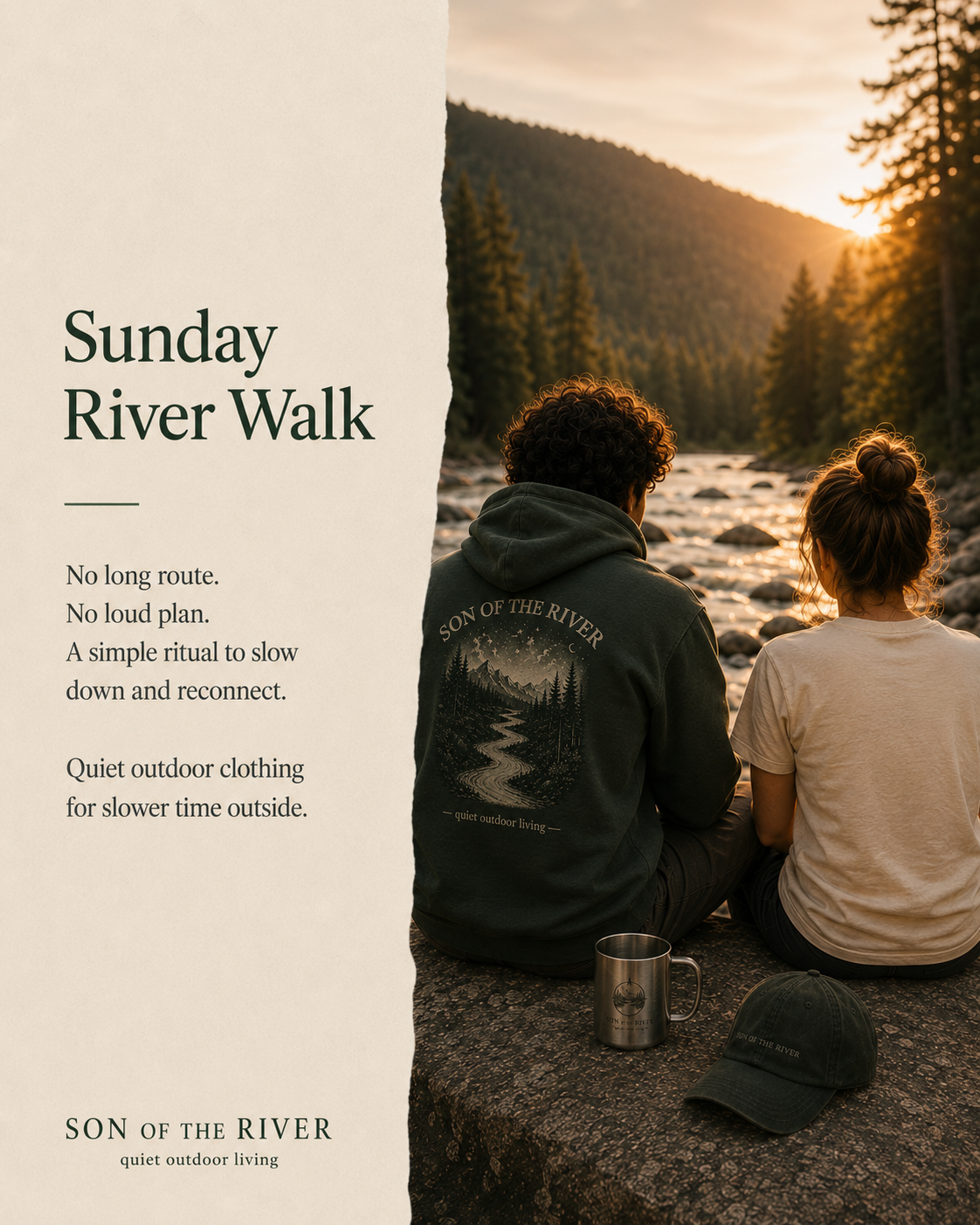
A Sunday walk with the family.
A dog disappearing into a patch of grass that looked completely harmless five seconds earlier.
A coffee that has already gone slightly cold.
Children stopping every twenty metres because apparently every stick deserves proper inspection.
A path you know so well that you stop thinking about where it leads.
These moments will rarely look dramatic.
But perhaps that is why there is room inside them.
Nothing needs to happen.
And when nothing needs to happen, we begin to notice more of what already is.
The quieter moments stay with us
Not every good memory arrives with an adrenaline rush.
Sometimes we remember light.
The way it came through the trees.
The temperature changing when we entered the forest.
The sound of water somewhere ahead.
Someone walking beside us.
A conversation we did not expect to have.
Or the fact that nobody spoke for ten minutes and it did not feel uncomfortable.
These memories are difficult to measure.
There may be no photograph.
No recorded distance.
No result.
But they stay.
Perhaps adventure is not always about intensity.
Sometimes it is simply about attention.
There is no correct way to be outside
The outdoor world can sometimes create its own kind of pressure.
The right equipment.
The right places.
The right experience.
The right level of difficulty.
But nature does not ask for any of that.
A river does not care whether your jacket is technical enough.
The forest does not know how many kilometres you walked last week.
And the path certainly does not mind if you turn around early.
You are allowed to be outside without being good at being outside.
You are allowed to walk slowly.
To stop often.
To know very little about the birds around you.
To take coffee.
To take children.
To take the dog.
To take absolutely no useful equipment beyond what you already had on.
There is no entrance exam.
Quiet does not mean boring
There is another misunderstanding.
Slower does not mean passive.
Quiet does not mean dull.
A small adventure can still contain discovery.
Take the path you normally pass.
Swim somewhere you have never entered the water before.
Walk into the forest before sunrise.
Take the family somewhere without planning what you will do when you arrive.
Drive twenty minutes instead of three hours and explore what is already close.
Follow the river upstream.
Stay outside when the rain begins instead of immediately heading home.
The point is not to avoid adventure.
It is to stop requiring adventure to prove itself.
Not every moment needs an audience
Modern adventures often arrive with a second task.
Document them.
Photograph them.
Share them.
There is nothing wrong with taking a picture of a beautiful place.
We do it too.
But there is a difference between remembering a moment and experiencing it primarily so that it can become something else afterwards.
Sometimes the phone can stay in the pocket.
Sometimes nobody needs to know where you went.
Sometimes an afternoon can simply disappear into the trees and belong only to the people who were there.
There is a particular kind of freedom in a moment that does not need an audience.
The clothing should stay quiet too
This thinking also shapes Son of the River.
We are interested in clothing that belongs naturally in these moments rather than dominating them.
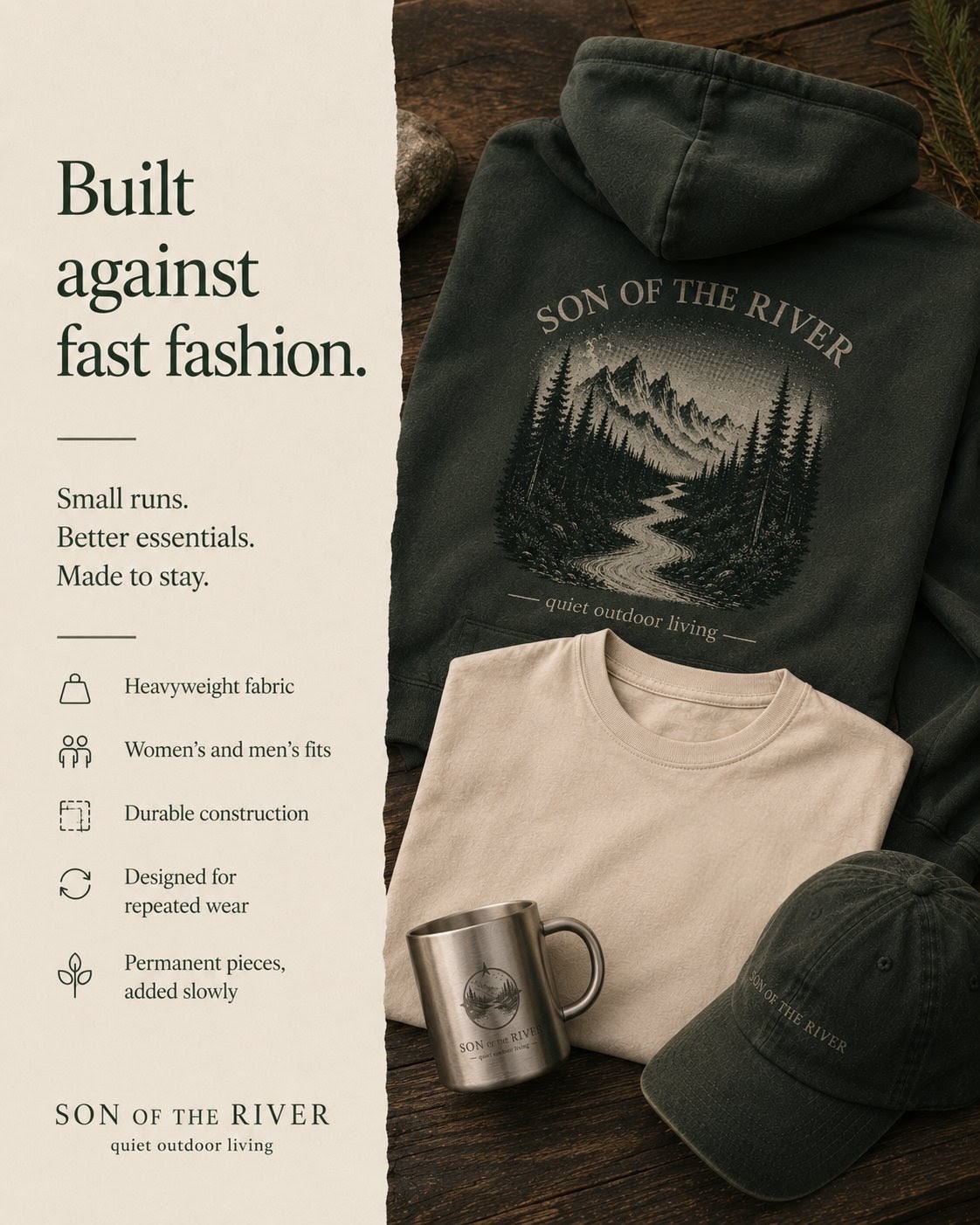
A heavyweight hoodie when the morning is colder than expected.
A T-shirt beneath the trees in summer.
A cap left by the door because it goes almost everywhere.
Pieces that become familiar rather than constantly being replaced by something new.
River Moss carries the landscape more visibly.
River Cream remains quieter.
But neither is meant to transform an ordinary walk into an event.
The clothes should belong in the moment.
They should never become the reason for it.
Start with what is close
It is easy to postpone adventure.
Until the weekend.
Until the holiday.
Until the weather improves.
Until there is enough time.
Until we can travel somewhere that feels worthy of it.
But small adventures work differently.
They can begin tonight.
Tomorrow morning.
After work.
Before breakfast.
Take the familiar walk and turn left where you normally turn right.
Take the coffee outside.
Sit beside the water instead of immediately walking past it.
Go into the forest without deciding how far you will go.
Bring someone with you.
Or do not.
There is nothing to complete.
Come home before anything extraordinary happens
Maybe that is the simplest version of quiet adventure.
Go outside.
Move for a while.
Notice something.
Come home.
Nothing remarkable needs to happen.
No dramatic weather.
No personal record.
No once-in-a-lifetime view.
Perhaps the dog got muddy.
Perhaps the coffee was better than expected.
Perhaps you found a place beneath the trees that you had somehow never noticed.
Perhaps you simply feel slightly different when you close the door behind you again.
That counts.
Adventure is a feeling, not a scale
We do not want to make big adventures smaller.
Climb the mountain.
Take the long journey.
Sleep beneath the stars.
Go somewhere that makes you nervous.
There is room for all of it.
But there should also be room for everything in between.
The walks nobody records.
The mornings that begin slowly.
The afternoons beside the river.
The familiar paths.
The quiet places close to home.
Adventure does not become more meaningful simply because it becomes more extreme.
Sometimes the smallest change of pace is enough.
Sometimes the smallest change of place is enough.
Sometimes a walk, a warm drink and a little space away from the noise is enough.
Not every adventure is loud.